Educational Overview
What is Mange?
Mange in small animals is a mite infestation affecting the skin and hair coat. It is common in guinea pigs, rabbits, hamsters, rats, mice, ferrets, and other pocket pets.
Common Mange Mites by Species
- Guinea pigs – Trixacarus caviae
Severe itching, pain, hair loss; can cause seizures from pain.
- Rabbits – Sarcoptes, Cheyletiella, Psoroptes
Scabs, dandruff, ear crusts.
- Hamsters / Mice / Rats – Demodex, Notoedres
Patchy hair loss, scaly skin.
- Ferrets – Sarcoptes, ear mites
Itching, thinning coat, ear irritation.
- Felines - Lynxacarus radovskyi Mites in Cats (Feline Fur Mites)
Dry, rough, or scruffy coat, Dandruff or powdery flakes in the fur, Excess grooming or licking, Mild itching or scratching, Hair thinning or broken hairs, Coat looking dusty, especially along the back and tail base
Diagnosis
- Skin scraping (mites may be hard to find)
- Clinical signs + response to treatment
- Ear swab for ear mites
Feline Fur Mites
The Simple “White Paper Test” for Detecting Fur Mites in Cats
This quick check can sometimes help detect Lynxacarus radovskyi without needing a microscope. It’s not perfect, but it’s a handy screening test many practitioners use when the coat looks suspicious.
What You Need
- A sheet of plain white paper
- A fine flea comb (or small grooming comb)
- Good lighting
Step-by-Step Method
- Place the white sheet of paper on a flat surface.
- Gently comb the cat’s coat along the back and near the tail base.
These are the most common areas where fur mites accumulate.
- Let the debris fall directly onto the white paper.
- Look closely at the material that falls off the coat.
What You May See If fur mites are present you may notice:
- fine dandruff-like debris
- tiny pale specks
- small particles that appear attached to hairs
Under strong light or magnification you might sometimes see tiny moving specks.
The debris often looks like dry powder or flaky dust from the coat.
Why This Works
Lynxacarus radovskyi lives on the hair shafts, not buried in the skin.
So when you comb the coat, mites, eggs, and debris can fall onto the paper.
Lynxacarus radovskyi Mites in Cats (Feline Fur Mites)
Lynxacarus radovskyi is a mite that causes a condition commonly called feline fur mite infestation. Unlike mange mites that burrow into the skin, these mites live on the hair shafts.
They are more common in tropical and warm climates, but cases are occasionally seen elsewhere.
SET OF
Educational Purposes
"This set is designed to support healthy skin and coat balance in small species. Traditionally, certain natural ingredients have been associated with resilience and comfort in cases where mites, irritation, or dryness may be a concern. Supporting skin vitality can encourage overall wellness and comfort.
Educational Note on Mite Species:
There are many different types of mites that may affect animals, and some are more host-specific than others, though cross-infestation can occur. Cheyletiella mites, for example, are associated with a condition sometimes referred to as “walking dandruff.” Several species are recognized:
-
Rabbits: Cheyletiella parasitovorax and Cheyletiella firmani
-
Cats: Cheyletiella blakei
-
Dogs: Cheyletiella yasguri
-
Hares: Cheyletiella strandtmanni
This highlights the importance of general skin and coat support for pets and small animals, particularly where mites are a concern. Our natural support sets are designed with broad-spectrum wellness in mind, offering gentle care across species.
For delicate areas around the eyes and face, consider M-Skin Clear Cream 52-C (60ml jar).
For ear care support, Ear-M-Oil 52 (D), a natural plant-based formulation with para-essential oils, may also be suitable.
Why Lynxacarus Fur Mites May Be Seen More Often in Cats Fed "High-Carbohydrate" Kibble Diets
Their are (2) Two nutrients stand out in feline nutrition because they directly support skin barrier integrity, hair strength, and immune defence in the skin.
1. Taurine amino acid powder
2. Omega 3 Oil - from capsule
Plus support the gut with S.Boulardii Probiotic powder
* Natural pet botanicals are not intended to replace veterinary care or medication. Our formulas are offered as an alternative health support for your animal's condition and not as a cure.
Formulated with plant-based ingredients selected for their gentle role in supporting overall balance and wellbeing.
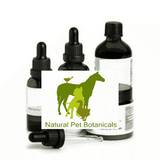
SET OF 3
1. Mange Skin Clear 52-B-1 50ml
2. Mito Clear 52-B-2 30ml
3. SystemiaGuard 52-B-3 50ml
“For pets and animals of all sizes, see the 52-A Set of 3 (larger bottles), suitable for small, medium, and large species.”
Contains:
Formula 1.
Wormwood (Artemisia absinthium)
Rue (Ruta Graveolens)
Rosemary (Rosmarinus officinalis)
Goldenseal (Hydrastis canadensis)
Neem Leaf (Azadirachta indica)
in purified water & 30%-40% USP alc.
Formula 2.
Phosphorus, recognised
Brimstone (Sulphur),
Psorinum
Mercurius Bromatus
in 20% USP alc. in purified water.
Formula 3.
Sweet Annie (Artemisinin 200C)
Japanese Knotweed Root (Persicaria capitata 200C)
Blue Flag (Baptisia 200C)
Pot of Marigold (Calendula 200C)
Cleavers (Galium aparine 200C)
Cordyceps (Cordyceps sinensis 200C)
in 20% USP alc. in purified water.
Need more advice or have more questions? Contact us for a FREE consultation with one of our fully qualified practitioners.
These statements are for general wellbeing and educational purposes only. This product is not intended to diagnose, treat, or prevent any disease. Always seek veterinary or professional advice for specific health concerns.
DISCLAIMER
The statements made regarding these products have not been evaluated by the Food and Drug Administration. The efficacy of these products has not been confirmed by FDA-approved research. These products are not intended to diagnose, treat, cure or prevent any disease. All information presented here is not meant as a substitute for or alternative to information from your health care practitioners. The Federal Food, Drug, and Cosmetic Act require this notice.