Austalian Tick Resilience Support (Members Only)
(Members Only)
Educational Overview
Tick Issues in Animals
Ticks are external parasites that feed on blood and may cause skin irritation, allergic reactions, weakness, or transmission of certain infections. Animals exposed to grasslands, bush areas, wildlife, or warm climates are at higher risk of tick attachment.
Regular tick checks, environmental management, and parasite prevention strategies are important for reducing exposure. If an animal shows signs such as lethargy, limping, paralysis, fever, or unusual behaviour after tick exposure, prompt veterinary assessment is recommended.
Ticks are found across the world and can affect animals and humans in many ways. Common types include tick paralysis ticks, brown dog ticks, bush ticks in Australia, as well as species carrying Rickettsia, Ehrlichiosis, and Lyme-related organisms.
Ticks in Australia
Australia is home to around 73 different species of ticks, with many found in New South Wales.
The majority—around 70 species—are harmless and do not cause major concern for animals or people.
However, three species are considered significant for stock owners and people living around bush areas are mainly in Queensland and New South Wales and Victoria:
-
Bush Tick – commonly found on livestock and pets in certain regions.
- Paralysis Tick – most often linked with coastal areas, traditionally associated with nervous system stress in animals.
Also important in NSW. Associated with skin irritation, anaemia, and occasionally spreading blood parasites in livestock.
- Cattle Tick – known to affect cattle health and productivity in northern areas.
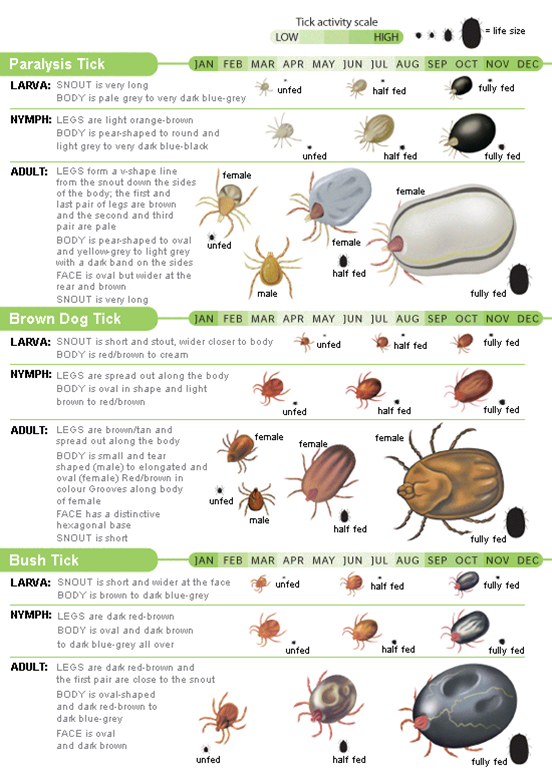
Paralysis Tick (Ixodes holocyclus):
-
Found mainly along the eastern seaboard of Australia (QLD, NSW, VIC).
-
Its saliva contains neurotoxins that can cause paralysis in pets, livestock, and even humans.
-
Considered the most dangerous tick species in Australia.
Cattle Tick (Rhipicephalus (Boophilus) microplus):
-
Found in northern Australia (Queensland, Northern Territory, northern NSW).
-
Does not cause paralysis.
-
Its main impact is transmitting blood-borne diseases (like babesiosis and anaplasmosis) to cattle, which can cause severe illness and production losses.
Bush Tick (Haemaphysalis longicornis):
Understanding the types of ticks in your area helps guide prevention and care practices.
* Natural pet botanicals are not intended to replace veterinary care or medication. Our formulas are offered as an alternative health support for your animal's condition and not as a cure.
SET OF
Educational Purposes
Tick Resilience Support
A carefully selected blend of natural plant and mineral ingredients, traditionally valued for supporting general wellbeing, vitality, and resilience in animals exposed to environmental stressors.
This natural formula is traditionally associated with encouraging balance in the body and supporting overall health, strength, and adaptability in domestic pets, kennel and cattery environments, rescue settings, farm animals, and wildlife.
It is designed to support animals living in outdoor or tick-prone environments, as part of a broader approach to seasonal wellness and environmental resilience.
Traditionally Associated Supportive Benefits
-
Supporting overall vitality and physical resilience
-
Encouraging general wellbeing during seasonal or environmental challenges
-
Promoting balance and adaptability in animals of all ages
Important Note
This formula is offered as a natural wellness support option only and is intended to be used as part of a holistic animal care program, alongside appropriate parasite management, environmental hygiene, and veterinary guidance. It is not a substitute for tick prevention or medical treatment.
Formulated with plant-based ingredients selected for their gentle role in supporting overall balance and wellbeing.
1. Tick Resilience 123 formula
Contains:
Purple Coneflower (Echinacea angustifolia 12X, 30C)
Juniper (Juniperus communis 12X, 30C)
Goldenseal (Hydrastis canadensis 30C, 1M)
in 20% USP alc.in purified water.
Practitioner Guidance – Tick Resilience Support (Members Only)
General Use Note
These suggestions are provided as traditional supportive guidance only, intended to complement environmental management, routine tick checks, and veterinary parasite protocols. This product is not a tick preventative or treatment
Canines (Dogs)
During periods of higher environmental exposure, small amounts may be added to food once or twice weekly as part of a seasonal wellness routine.
During lower-exposure periods, occasional inclusion in drinking water or meals may be used to support general resilience.
Felines (Cats)
A diluted preparation may be mixed into a small amount of water and lightly added to meals on an occasional basis, as part of a broader wellness and environmental support routine.
Farm Animals, Wildlife & Feral Animals
In larger group settings, diluted amounts may be added to shared water sources as part of a general herd or flock wellness approach, alongside established parasite and biosecurity programs.
Equines (Horses)
Some practitioners choose to apply diluted preparations topically to high-exposure areas as part of a traditional outdoor resilience routine. This approach is intended to support general comfort and environmental adaptability, and should be used alongside standard tick management practices.
Important Note
Individual responses may vary. These approaches are intended as supportive wellness measures only and should not replace tick prevention products, veterinary advice, or parasite control programs.
Need more advice or have more questions? Contact us for a FREE consultation with one of our fully qualified practitioners.
These statements are for general wellbeing and educational purposes only. This product is not intended to diagnose, treat, or prevent any disease. Always seek veterinary or professional advice for specific health concerns.
DISCLAIMER
The statements made regarding these products have not been evaluated by the Food and Drug Administration. The efficacy of these products has not been confirmed by FDA-approved research. These products are not intended to diagnose, treat, cure or prevent any disease. All information presented here is not meant as a substitute for or alternative to information from your health care practitioners. The Federal Food, Drug, and Cosmetic Act require this notice.

(Members Only)
Educational Overview
Tick Issues in Animals
Ticks are external parasites that feed on blood and may cause skin irritation, allergic reactions, weakness, or transmission of certain infections. Animals exposed to grasslands, bush areas, wildlife, or warm climates are at higher risk of tick attachment.
Regular tick checks, environmental management, and parasite prevention strategies are important for reducing exposure. If an animal shows signs such as lethargy, limping, paralysis, fever, or unusual behaviour after tick exposure, prompt veterinary assessment is recommended.
Ticks are found across the world and can affect animals and humans in many ways. Common types include tick paralysis ticks, brown dog ticks, bush ticks in Australia, as well as species carrying Rickettsia, Ehrlichiosis, and Lyme-related organisms.
Ticks in Australia
Australia is home to around 73 different species of ticks, with many found in New South Wales.
The majority—around 70 species—are harmless and do not cause major concern for animals or people.
However, three species are considered significant for stock owners and people living around bush areas are mainly in Queensland and New South Wales and Victoria:
-
Bush Tick – commonly found on livestock and pets in certain regions.
- Paralysis Tick – most often linked with coastal areas, traditionally associated with nervous system stress in animals.
Also important in NSW. Associated with skin irritation, anaemia, and occasionally spreading blood parasites in livestock.
- Cattle Tick – known to affect cattle health and productivity in northern areas.

Paralysis Tick (Ixodes holocyclus):
-
Found mainly along the eastern seaboard of Australia (QLD, NSW, VIC).
-
Its saliva contains neurotoxins that can cause paralysis in pets, livestock, and even humans.
-
Considered the most dangerous tick species in Australia.
Cattle Tick (Rhipicephalus (Boophilus) microplus):
-
Found in northern Australia (Queensland, Northern Territory, northern NSW).
-
Does not cause paralysis.
-
Its main impact is transmitting blood-borne diseases (like babesiosis and anaplasmosis) to cattle, which can cause severe illness and production losses.
Bush Tick (Haemaphysalis longicornis):
Understanding the types of ticks in your area helps guide prevention and care practices.
* Natural pet botanicals are not intended to replace veterinary care or medication. Our formulas are offered as an alternative health support for your animal's condition and not as a cure.
SET OF
Educational Purposes
Tick Resilience Support
A carefully selected blend of natural plant and mineral ingredients, traditionally valued for supporting general wellbeing, vitality, and resilience in animals exposed to environmental stressors.
This natural formula is traditionally associated with encouraging balance in the body and supporting overall health, strength, and adaptability in domestic pets, kennel and cattery environments, rescue settings, farm animals, and wildlife.
It is designed to support animals living in outdoor or tick-prone environments, as part of a broader approach to seasonal wellness and environmental resilience.
Traditionally Associated Supportive Benefits
-
Supporting overall vitality and physical resilience
-
Encouraging general wellbeing during seasonal or environmental challenges
-
Promoting balance and adaptability in animals of all ages
Important Note
This formula is offered as a natural wellness support option only and is intended to be used as part of a holistic animal care program, alongside appropriate parasite management, environmental hygiene, and veterinary guidance. It is not a substitute for tick prevention or medical treatment.
Formulated with plant-based ingredients selected for their gentle role in supporting overall balance and wellbeing.
1. Tick Resilience 123 formula
Contains:
Purple Coneflower (Echinacea angustifolia 12X, 30C)
Juniper (Juniperus communis 12X, 30C)
Goldenseal (Hydrastis canadensis 30C, 1M)
in 20% USP alc.in purified water.
Practitioner Guidance – Tick Resilience Support (Members Only)
General Use Note
These suggestions are provided as traditional supportive guidance only, intended to complement environmental management, routine tick checks, and veterinary parasite protocols. This product is not a tick preventative or treatment
Canines (Dogs)
During periods of higher environmental exposure, small amounts may be added to food once or twice weekly as part of a seasonal wellness routine.
During lower-exposure periods, occasional inclusion in drinking water or meals may be used to support general resilience.
Felines (Cats)
A diluted preparation may be mixed into a small amount of water and lightly added to meals on an occasional basis, as part of a broader wellness and environmental support routine.
Farm Animals, Wildlife & Feral Animals
In larger group settings, diluted amounts may be added to shared water sources as part of a general herd or flock wellness approach, alongside established parasite and biosecurity programs.
Equines (Horses)
Some practitioners choose to apply diluted preparations topically to high-exposure areas as part of a traditional outdoor resilience routine. This approach is intended to support general comfort and environmental adaptability, and should be used alongside standard tick management practices.
Important Note
Individual responses may vary. These approaches are intended as supportive wellness measures only and should not replace tick prevention products, veterinary advice, or parasite control programs.
Need more advice or have more questions? Contact us for a FREE consultation with one of our fully qualified practitioners.
These statements are for general wellbeing and educational purposes only. This product is not intended to diagnose, treat, or prevent any disease. Always seek veterinary or professional advice for specific health concerns.
DISCLAIMER
The statements made regarding these products have not been evaluated by the Food and Drug Administration. The efficacy of these products has not been confirmed by FDA-approved research. These products are not intended to diagnose, treat, cure or prevent any disease. All information presented here is not meant as a substitute for or alternative to information from your health care practitioners. The Federal Food, Drug, and Cosmetic Act require this notice.
Related Products
Insect Bite Reactions Support
(6)
Sting and Bites Support
(2)
Fly Bite Support
(2)
Bot Flies in Equines & Farm Animals
Flea Repellent Neem Soap
(10)
Parasite-Related Environmental Resilience Health Support - Set of 2 (Members Only)
(3)
Available for purchase after consultation with a practitioner.
Available for purchase after
consultation with a practitioner.
Become a member, It’s free.
Parasite-Related Environmental Resilience Support
Available for purchase after consultation with a practitioner.
Available for purchase after
consultation with a practitioner.
Become a member, It’s free.
Bite & Venom Balance Support all Species - Set of 3
(8)
Natural Support After Tick Fever Exposure – Set of 2
(2)